Outsourcing is the practice of delegating specific business tasks or functions, such as accounting, payroll, human resources, or IT support, to an external provider rather than managing them in-house. Businesses operating in Malaysia commonly outsource finance and accounting, HR administration, IT services, customer support, and marketing functions to reduce operational costs and access specialised expertise without expanding headcount.
For companies operating in or entering Malaysia, outsourcing offers a practical way to manage compliance-heavy functions, including bookkeeping, tax filing, and payroll processing, while keeping internal teams focused on core priorities. Malaysia’s appeal as an outsourcing destination rests on its skilled, multilingual workforce, competitive operating costs, and a business environment shaped by established regulatory frameworks.
InCorp Malaysia, an Ascentium Company, supports businesses across accounting and finance, HR, and compliance outsourcing, with services tailored to companies of different sizes and industries.
Key Insights
- Understand the advantages of outsourcing in Malaysia, including its cost-effective solutions and skilled workforce.
- Gain insights into how outsourcing can help businesses focus on core activities and drive efficiency.
- Learn how partnering with experts like InCorp Malaysia can simplify the outsourcing process and ensure a smooth transition.
What is Outsourcing?
Outsourcing refers to the practice of delegating specific tasks, processes, or services to external organisations, often third-party vendors or specialised firms. While closely related, outsourcing is a broader concept that differs from Business Process Outsourcing (BPO).
What is Business Process Outsourcing (BPO)?
BPO is a specialised subset of outsourcing that focuses specifically on entrusting business operations to external service providers. These processes often include areas like customer service, payroll, human resources, data entry, and technical support.
BPO providers are experts in these functions, offering businesses access to advanced technologies, improved efficiencies, and streamlined operations, often at a lower cost.
How is Outsourcing Different from BPO?
Outsourcing is a broad term that encompasses the transfer of any task or service to an external party, whether it’s manufacturing, IT infrastructure, or operational support. On the other hand, BPO specifically targets the outsourcing of office-based and operational processes.
In essence, BPO is a focused segment of outsourcing designed to handle routine business functions, enabling companies to concentrate on strategic priorities and growth initiatives.
By leveraging specialised expertise from BPO providers, businesses can optimise their operations, reduce costs, and allocate internal resources more effectively to core objectives.
What is Global Business Services (GBS), and how does it differ from outsourcing?
Global Business Services, or GBS, is the model where a company centralises support functions — finance and accounting, HR, IT, procurement, supply chain and customer service — into one or more hubs serving the entire group, rather than each country office running its own back office.
The term has largely replaced “shared services centre” in industry use, and the shift is meaningful: a shared services centre historically meant one function in one location handling transactional work at lower cost, while GBS implies multifunctional, multi-country delivery that increasingly includes analytics and business partnering.
The distinction that matters commercially is ownership. A captive GBS centre is built, staffed and owned by the company itself, which carries the entity, the lease, the headcount and the local compliance obligations. Outsourced delivery places the same functions with a third-party provider under contract.
Most companies entering Malaysia use outsourced delivery first and evaluate a captive centre only once volumes justify it.
What Can You Outsource?
When it comes to outsourcing, the possibilities are vast. Businesses commonly outsource the following tasks and functions:
- Accounting and Finance services, such as payroll management, bookkeeping, and tax filing.
- Human Resource Management, including recruitment, onboarding, and employee benefits administration.
- IT Services, like software development, technical support, and cybersecurity.
- Customer Support, ranging from call centre operations to online chat support.
- Marketing and Design, such as content creation, social media management, and graphic design tasks.
At InCorp Malaysia, an Ascentium Company, we specialise in providing professional support for accounting and finance services, ensuring accuracy and compliance with payroll management, bookkeeping, and tax filing processes.
For a full breakdown of what’s included, see our accounting and bookkeeping services in Malaysia.
Additionally, our expertise in Human Resource Management allows us to assist with recruitment, onboarding, and benefits administration, streamlining HR operations for businesses of all sizes.
The Benefits of Outsourcing Services
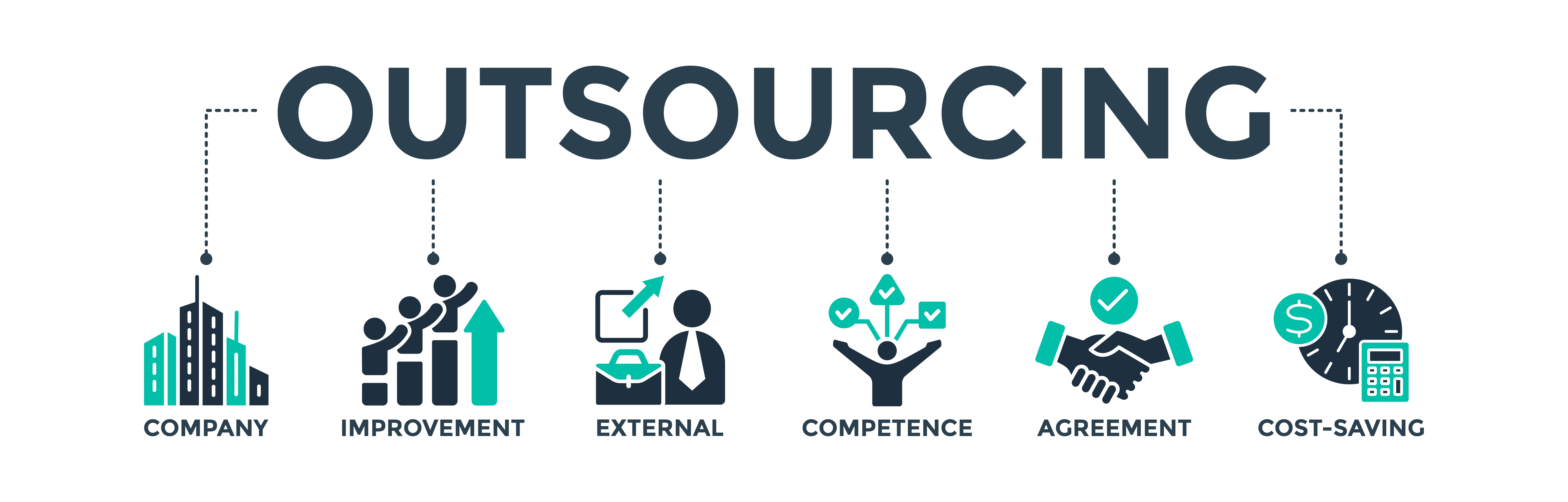
Outsourcing offers numerous advantages which can significantly contribute to a business’s efficiency and growth:
1. Cost Savings
Outsourcing eliminates the need for significant infrastructure investments and reduces labour costs. By hiring professionals from cost-competitive regions like Malaysia, business owners can achieve top-quality service at a fraction of the price of maintaining in-house teams.
2. Improved Efficiency
Specialised outsourcing providers have the expertise, tools, and processes to complete tasks faster and more effectively. This enables businesses to meet deadlines and improve operational efficiencies without stretching internal resources.
3. Access to Specialised Expertise
Tapping into a global talent pool allows businesses to leverage niche skills that may not be readily available in in-house teams. Whether it’s technical expertise in IT or creative talent for branding, outsourcing ensures access to highly qualified professionals.
4. Flexibility and Scalability
Outsourcing allows businesses to remain agile by quickly scaling resources up or down based on seasonal demands, new projects, or market dynamics.
Challenges in Outsourcing Companies and How to Tackle Them
Despite its many advantages, outsourcing does come with its share of challenges. Being prepared to manage these obstacles is key to reaping its full benefits.
1. Communication Barriers
Working with teams in different regions can sometimes lead to misunderstandings. To overcome this, reputable outsourcing partners like InCorp Global ensure clear communication channels and language fluency.
2. Quality Assurance
Maintaining high standards when partnering with external teams can be difficult. Businesses should select outsourcing providers with verified track records and comprehensive monitoring processes for quality control.
3. Data Privacy Concerns
Outsourcing often involves sharing sensitive data, such as employee records or customer information. Partnering with firms prioritising data security and complying with international regulations ensures peace of mind.
Why Malaysia for Outsourcing?
Malaysia’s position rests on an established services ecosystem rather than cost alone. MIDA recorded RM426.7 billion in approved investments in 2025, an 11% increase year on year and the highest on record, with the services sector accounting for RM281.3 billion or 65.9% of the total.
Activity is heavily concentrated in the Klang Valley: the GBS Malaysia Strategy 2022–2027 Mid-Term Report found that Selangor and Kuala Lumpur together accounted for around 87% of new GBS companies established between 2021 and mid-2025. That concentration produces a deep, experienced talent market that smaller operations can recruit from directly.
1. Skilled Workforce
Malaysia boasts a highly educated and multilingual talent pool proficient in English, Chinese, and Malay. This makes it easier for businesses to find employees well-suited to various roles. Major multinationals run business services hubs in and around the city, including BASF, which announced in February 2026 that it would consolidate its global supply chain services at its established Kuala Lumpur hub.
2. Cost-Effective Solutions
With lower operating costs than other outsourcing destinations, Malaysia allows organisations to achieve more significant cost savings without compromising service quality.
3. Favourable Business Environment
Malaysia’s government actively supports business investment through incentives, robust infrastructure, and policies that simplify the process of foreign companies setting up operations.
4. Strategic Location
Located at the heart of Southeast Asia, Malaysia offers a time zone advantage and easy linkage to other Asian markets, making it a strategic choice for expanding businesses.
Captive shared services centre or outsourced provider?
Cost reduction is no longer the main driver of GBS decisions. The industry has moved towards what practitioners call the value shift — away from pure transactional processing and towards finance analytics, compliance coordination and digital operations. For a company deciding how to structure support functions in Malaysia, that reframes the question from “where is cheapest” to “which model gives us capability we can keep”.
The practical difference is time and internal capacity. A captive centre is a market-entry decision: it requires an entity, premises, recruitment, systems and local compliance, and it typically takes 18 to 24 months to reach operational maturity. It also consumes the very management bandwidth most companies are trying to release. Outsourced delivery begins producing within months and converts fixed internal cost to variable external cost, at the price of less direct control over day-to-day execution.
The decision usually turns on transaction volume, the number of jurisdictions involved, how much specialist regulatory knowledge the work requires, and whether the function is a source of competitive advantage or simply a requirement. Companies with volume concentrated in one or two markets rarely justify a captive centre.
How to Outsource with InCorp Malaysia
Regarding outsourcing in Malaysia, InCorp Global offers a seamless and efficient experience. Here’s how your outsourcing process can look with their expert assistance:
Step 1. Initial Consultation
Start by reaching out to the team at InCorp Global. Their consultants take the time to understand your business goals, resource needs, and specific outsourcing requirements.
Step 2. Service Mapping
Whether it’s payroll processing or IT services, the experts at InCorp Global identify the most suitable outsourcing solutions tailored to your business’s unique needs.
Step 3. Customised Implementation
From finding the right service providers to managing contract negotiations, InCorp Global ensures the onboarding process is smooth and tailored for your organisation.
Step 4. Ongoing Support
Once outsourcing arrangements are in place, you can rely on InCorp Global for continual support, updates, and recommendations to optimise performance.
Flexible Pricing Options
One added perk of working with InCorp Global is their transparent and flexible pricing models. They offer packages that suit businesses of all sizes, making outsourcing accessible even for start-ups and SMEs.
Streamline Your Business Operations Today
Outsourcing has transcended from a cost-saving tactic to a critical business growth strategy. Malaysia is emerging as a global outsourcing hub. With the support of a proven partner like InCorp Malaysia, your business can streamline operations, reduce overheads, and gain unparalleled access to global talent.
Start your outsourcing journey today with a free consultation—your path to simplified operations and increased productivity begins here.
FAQs About Outsourcing in Malaysia
- Outsourcing is delegating business processes or tasks to external service providers, enabling businesses to focus on their core activities and achieve operational efficiencies.
- Malaysia offers a competitive labour cost, skilled workforce, strategic location, and government support for outsourcing initiatives, making it an attractive destination for businesses looking to optimise operations and reduce costs.
- InCorp Malaysia offers tailored solutions for small businesses and entrepreneurs looking to outsource specific areas such as accounting, tax filing, human resources, governance & compliance, ESG & sustainability, and more. They also provide guidance and support throughout the outsourcing process.
- BPO refers to contracting specific processes to an external provider. GBS refers to the internal operating model of centralising support functions into hubs, which may be captive, outsourced, or a mix. A company can run a GBS model that uses BPO providers for parts of it.
- A captive centre typically takes 18 to 24 months to reach full operational maturity, covering entity setup, premises, recruitment, systems and compliance. Outsourcing the same functions to an established provider generally begins delivering within months.
Get Your Outsourcing Options Assessed
About the Author